Compact Lab Vacuum Spin Coater A Game-Changer for Lithium Battery Coating Research and Development

In the fast-evolving field of lithium battery technology, precision, efficiency, and reliability are the cornerstones of successful research and development (R&D). As researchers and engineers strive to enhance battery performance, energy density, and safety, the demand for advanced lab-scale coating equipment has never been higher. The Compact Lab Vacuum Spin Coater Coating Machine for Lithium Battery Coating Applications emerges as a pivotal tool, tailored specifically to meet the rigorous requirements of lithium battery electrode and electrolyte coating in laboratory settings. This compact yet powerful device combines vacuum technology with high-precision spin coating, addressing the key challenges of uniform film deposition, defect reduction, and process repeatability—critical factors that directly impact the performance of next-generation lithium batteries.
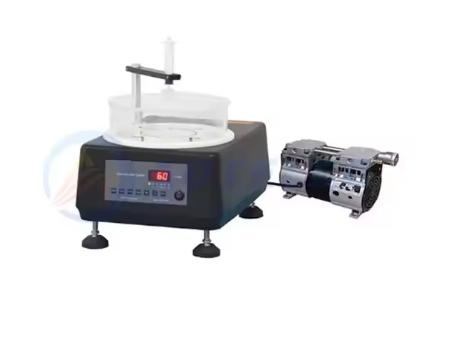
Vacuum Spin Coater

Unlike conventional spin coaters, this specialized equipment integrates a vacuum system into its compact design, making it uniquely suited for lithium battery coating applications. Lithium battery coatings, whether for cathodes, anodes, or electrolytes, require a contamination-free environment and precise control over film thickness and uniformity to avoid common defects such as pinholes, agglomerates, and uneven edges that compromise battery performance. The vacuum function of this machine effectively eliminates air bubbles in the coating slurry, a major cause of pinhole defects, while also preventing moisture and oxygen contamination—two critical culprits that degrade battery materials and reduce cycle life. This ensures that the coating process is carried out in a controlled atmosphere, laying the foundation for high-quality, consistent thin films.


The compact design of the machine is a standout feature, particularly for laboratory environments where space is often limited. Measuring significantly smaller than industrial-scale coating equipment, it can be seamlessly integrated into fume hoods, glove boxes, or small lab workstations without sacrificing performance—making it ideal for academic research labs, small-scale R&D facilities, and battery material testing centers. Despite its small footprint, the machine boasts robust construction, with an anodized aluminum shell that ensures durability and chemical resistance, capable of withstanding the harsh solvents and corrosive materials commonly used in lithium battery coating slurries.


At the core of the machine’s performance is its high-precision spin coating system, which offers adjustable rotational speeds ranging from 100 to 9999 rpm with 1 rpm resolution, allowing researchers to fine-tune coating parameters to match specific material requirements. The vacuum chuck system securely holds substrates—such as copper foil for anodes, aluminum foil for cathodes, or glass slides for electrolyte testing—preventing slippage during high-speed rotation and ensuring uniform film deposition across the entire substrate surface. This level of precision is essential for lithium battery coatings, where even minor variations in film thickness can lead to inconsistent ion conduction, reduced energy density, or thermal runaway risks.

Another key advantage of this compact lab vacuum spin coater is its versatility, adapting to a wide range of lithium battery coating applications. It is equally effective for depositing active material slurries on electrodes, fabricating thin-film electrolytes (including polymer-ceramic composites), and coating protective layers on battery components—supporting R&D for lithium-ion, lithium-sulfur, and sodium-ion batteries alike. The machine’s programmable functionality allows users to store up to 5 coating recipes, each with 5 customizable steps, enabling consistent reproduction of coating processes and accelerating research workflows by eliminating the need for repeated parameter adjustments.


In addition to its technical capabilities, the machine is designed with user-friendliness in mind. An intuitive LCD interface simplifies operation, allowing researchers to easily set and monitor spin speed, acceleration, coating duration, and vacuum pressure without specialized training. The removable spin bowl and solvent-resistant transparent lid facilitate easy cleaning and maintenance, reducing downtime between experiments and ensuring long-term reliability. The integrated oil-free vacuum pump operates quietly, minimizing lab noise pollution while avoiding oil contamination that could compromise coating quality and battery performance.


The impact of this compact lab vacuum spin coater on lithium battery R&D is significant. By enabling precise, uniform, and contamination-free coating, it helps researchers overcome common challenges in battery material development, such as poor film adhesion, uneven thickness, and defect formation. For example, in lithium-sulfur battery research, the machine’s ability to deposit uniform sulfur-carbon composite cathodes and polymer electrolytes has been shown to enhance cycling stability and reduce polysulfide dissolution—a key barrier to commercialization. Similarly, in solid-state battery R&D, it provides a reliable platform for depositing thin-film electrolytes, supporting the development of safer, higher-energy-density batteries.
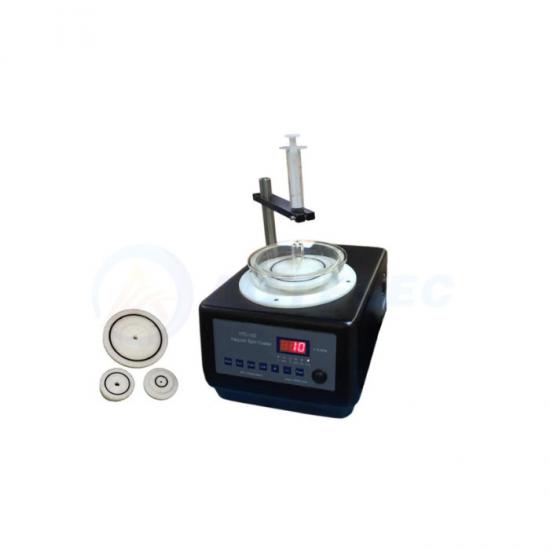
vacuum spin coater

As the global push for sustainable energy storage intensifies, the need for efficient, lab-scale battery R&D tools becomes increasingly critical. The Compact Lab Vacuum Spin Coater Coating Machine for Lithium Battery Coating Applications fills this gap, offering a cost-effective, space-saving solution that does not compromise on precision or performance. Its unique combination of vacuum technology, compact design, and user-friendly operation makes it an indispensable tool for researchers and engineers working to advance lithium battery technology—from material testing and prototype development to process optimization and scale-up feasibility studies.


This compact lab vacuum spin coater redefines the standard for lithium battery coating in laboratory settings. It addresses the unique challenges of battery R&D by providing a controlled, precise, and versatile coating platform, enabling researchers to accelerate innovation and unlock the full potential of next-generation lithium batteries. Whether for academic research, industrial R&D, or material testing, this machine is a valuable investment that drives progress in the pursuit of safer, more efficient, and sustainable energy storage solutions.


The Application and Knowledge of Film Applicators/Doctors in Battery Laboratories

In the dynamic landscape of battery research and development, achieving precise and uniform electrode fabrication is paramount. The performance, safety, and cycle life of lithium-ion batteries are deeply influenced by the quality of the coated films. At the heart of this critical process lies the film applicator, also commonly known as a doctor blade. This indispensable tool serves as the bridge between raw material slurries and functional battery electrodes, enabling researchers to control film thickness, uniformity, and adhesion with exceptional accuracy. Understanding the application principles, types, and operational nuances of film applicators is essential for advancing battery technology and accelerating the path from laboratory innovation to commercial reality.

Film Applicators

Core Principles and Working Mechanism

A film applicator operates on the fundamental principle of shear coating, where a viscous slurry is uniformly spread across a substrate surface—typically copper or aluminum foil for anodes and cathodes, respectively. The core components include a precision-machined blade, an adjustable height mechanism, and a stable support stage. As the substrate moves beneath the blade or the blade moves across the substrate, the doctor blade defines a precise gap, known as the "gap setting" or "wet film thickness." This gap determines the thickness of the wet coating, which subsequently dictates the dry film thickness after solvent evaporation.

The success of the coating process hinges on several key parameters. The viscosity of the slurry is critical; it must be optimized to flow smoothly under the blade without causing agglomeration or air entrapment. The surface energy of the substrate, the speed of the movement, and the angle of the doctor blade relative to the substrate all play pivotal roles in achieving a defect-free film. A slight angle (typically 10-45 degrees) helps in smoothing the slurry surface, while excessive pressure can lead to streaking or uneven coating.

Types of Film Applicators and Their Applications

Battery laboratories utilize various types of film applicators, each tailored to specific research needs, scale of experimentation, and budget constraints.

1. Manual Film Applicators

Manual applicators are the most basic and cost-effective tools, ideal for small-scale R&D, prototype fabrication, and educational settings. They consist of a handheld or table-top device with a fixed or adjustable gap. While they offer simplicity and flexibility, their precision is somewhat limited by human operation. They are excellent for initial trials, material screening, and teaching fundamental coating principles. However, achieving consistent results across multiple samples can be challenging due to variations in hand pressure and speed.

2. Automatic Film Applicators

Automatic film applicators represent the gold standard for modern battery labs. These automated systems feature programmable speed, gap adjustment, and substrate clamping mechanisms. They deliver unparalleled uniformity and reproducibility, ensuring that each coated sample is virtually identical. Key features include digital controls for precise parameter setting, automatic film advancement, and often, integrated heating for controlled drying. Automatic applicators are indispensable for high-throughput experimentation, statistical process control, and when generating data for regulatory submissions or peer-reviewed publications. They significantly reduce human error and are capable of handling a wide range of slurry viscosities and substrate sizes.

3. Slot Die Coaters (Advanced Applicator System)

For more sophisticated applications, such as the deposition of multi-layered electrodes, solid-state electrolyte coatings, or thin-film research, slot die coaters are employed. While technically a more advanced coating technology, they function on principles related to film application. Instead of a blade, a slot die head deposits the slurry onto the substrate in a controlled, curtain-like flow. This method offers superior control over film thickness, edge definition, and the ability to coat extremely thin layers. Slot die coaters are crucial for the development of next-generation batteries with complex architectures, where precision at the microscale is critical.

film applicator

Key Knowledge and Operational Best Practices

1. Calibration and Precision Maintenance

The accuracy of a film applicator is only as good as its calibration. Regular checks of the gap setting using precision gauges are essential to compensate for wear and tear on the blade and mechanical components. The blade itself must be kept clean and free of dried slurry to prevent scratches or uneven coating. Even minor nicks or residues can lead to visible defects in the electrode, which can significantly degrade battery performance.

2. Substrate Preparation

Before coating, the current collector foils (copper and aluminum) must be properly prepared. This typically involves cleaning to remove dust, oils, or any surface contaminants that could hinder adhesion. In some cases, surface treatments like corona discharge or calendaring are applied to improve the wettability of the substrate by the slurry, ensuring better film adherence and reducing the risk of delamination during cycling.

3. Slurry Handling and Optimization

The slurry is the lifeblood of the coating process. Its formulation—including active material, binder, conductive additive, and solvent—must be optimized for rheology. A slurry that is too viscous will be difficult to spread and may cause the blade to lift, while a slurry that is too runny will lack uniformity and sag. Conducting rheological tests to determine the ideal viscosity and thixotropic behavior is a key step before any coating experiment. Additionally, ensuring the slurry is well-mixed and free of agglomerates is vital for a homogeneous film.


The Impact on Battery Performance

The quality of the coating directly translates to battery performance. A uniform, defect-free electrode with consistent thickness ensures optimal ionic and electronic transport within the cell. This leads to higher energy density, improved rate capability (the battery's ability to charge and discharge quickly), and longer cycle life. Conversely, a poorly coated electrode with uneven layers or pinholes can cause local hotspots, increased internal resistance, and ultimately, safety hazards like thermal runaway.

Film applicators/doctors are foundational tools in battery laboratories, serving as the gateway to high-performance electrode materials. Mastery of their application, operation, and associated knowledge is indispensable for researchers striving to push the boundaries of battery technology. From manual benchtop setups to advanced automated systems, the choice of applicator depends on the specific goals of the research. By adhering to best practices in calibration, substrate preparation, and slurry management, scientists can unlock the full potential of new battery chemistries and drive the transition to a more sustainable energy future.


What are the differences between hand-made sodium tablets and commercial ready-made sodium tablets?

With the rapid development of industrial technology, the reserves of non-renewable energy sources represented by fossil fuels have decreased sharply in recent years. There is an urgent need for a green and low-cost electrochemical energy storage technology to adapt to the rapid development of renewable energy and improve its utilization rate. Lithium-ion batteries (LIBs) have successfully been commercialized and are used for large-scale energy storage due to their excellent energy density and cycle life. However, the uneven distribution of lithium resources globally and their high prices have prompted people to gradually shift to other metal-ion batteries with significant cost advantages, such as sodium-ion batteries (SIBs), to reduce the dependence of energy storage technologies on lithium resources. Currently, a large number of researchers have focused their attention on the development of high-performance SIBs.


During the development work in the laboratory stage, the assembly and testing of button cells are indispensable. In the tests of symmetrical button cells and half cells, the negative electrode is a sodium metal disc. Sodium discs can generally be obtained in two ways:


1. They can be rolled and sliced from a small amount of metallic sodium blocks; 2. They can be directly purchased as commercial finished composite sodium discs.

I. Steps for Using Hand-rolled Sodium Metal Sheets

Required materials: Sodium blocks stored in kerosene, dust-free paper (or dust-free cloth), plastic sealing bag, plastic knife, central cylindrical mold, plastic chopping board, plastic roller.


 Sodium Metal Chips

Figure 1. Preparation steps of hand-rolled sodium sheets

1. Handling sodium blocks: In a glove box filled with argon gas and having a water and oxygen content of less than 0.1 ppm, remove the sodium blocks stored in kerosene. Wipe the surface of the sodium blocks clean with dust-free paper (or dust-free cloth), and use a plastic knife to scrape off the oxide layer on the surface of the sodium blocks, revealing the shiny sodium metal.

2. Packaging: Place the processed sodium blocks into a sealed plastic bag to prevent contamination of the sodium blocks due to direct contact with tools and other items.

3. Rolling: Use plastic rollers to roll the sodium blocks in different directions to form large sodium sheets (the thickness can be adjusted by changing the force).

4. Tabletting: Use the central cylindrical mold to punch out sodium tablets of different specifications in the form of circles.

5. Remove the sodium tablets: Open the plastic packaging bag, and the cut-out circular sodium tablets will automatically fall off. Place the excess sodium in the recycling bottle.

It should be noted that the dust-free paper or dust-free cloth needs to be vacuum-dried in advance to reduce moisture. During the preparation process, it should be carried out in a glove box filled with argon gas to prevent sodium metal from reacting with the air. At the same time, the operators need to wear additional protective gloves on top of the rubber gloves in the glove box to ensure safety.


II. Usage Steps of Commercial Compound Sodium Chips:

 Sodium Metal Chips

Figure 2. Operating steps for commercial composite sodium tablets before use

1.With the left hand, hold the flat and widened forceps to grip the round piece. With the right hand, use the pointed stainless steel forceps to remove the blue protective film. It is best not to use rubber forceps to remove the film.

2. Use the same method to tear off the transparent film on the other side


III. Comparison between commercial sodium tablets and hand-rolled sodium tablets

Purity contrast

1. For the preparation of hand-rolled sodium sheets, the usual procedure is to first remove the large sodium blocks from the kerosene and wipe the surface clean. However, this step is likely to result in incomplete cleaning of the kerosene, leading to low purity and high impurity content of the sodium sheets produced by hand; while commercial sodium sheets generally have a higher purity, usually above 99.7%, with less impurities, which reduces the occurrence of side reactions caused by impurities and extends the service life of the battery.

2. Comparison of Preservation Time

For hand-wound sodium sheets, they are generally made and used immediately. Due to the absence of a protective film, after slicing and during the battery assembly process, the surface will be exposed to the atmosphere of the glove box for a long time due to garbage cleaning, resulting in a significant degree of oxidation. While commercial composite sodium sheets are used as needed, the protective film can be removed within 10 seconds, increasing the battery assembly efficiency by more than twice. Moreover, the composite sodium electrode sheets are composed of high-purity metallic sodium combined with aluminum foil. Both sides are treated with inert coating and then undergo four layers of protective packaging, allowing for long-term storage without oxidation. (It can be stored in the glove box for more than three months.)

3. Uniformity Contrast

The production process of hand-wound sodium sheets involves significant uncertainties. As they are handmade, their thickness and shape cannot be made completely consistent, which may affect the repeatability of battery tests. The surface of hand-wound sodium sheets may be relatively rough, resulting in a smaller contact area and poorer contact quality with the electrode materials compared to commercial sodium sheets. This leads to fluctuations in battery performance. Compared to homemade circular sheets, it can avoid the problem of low battery assembly efficiency caused by non-standard production processes. At the same time, the smooth and shiny surface of the sodium sheets can also reduce the occurrence of micro-short circuits caused by burrs or scratches on the surface, ensuring the safe and stable operation of sodium batteries. These advantages make the composite sodium electrode sheets have broad application prospects in the field of sodium battery research, providing researchers with a better and more efficient option.

Overall, in battery tests, commercial sodium sheets, due to their high consistency, stability, flatness and purity, can provide researchers with more accurate and reliable test results. However, hand-milled sodium sheets, due to the limitations of the manufacturing process, perform relatively poorly in terms of performance. When researchers choose sodium sheets, they need to consider the specific experimental requirements and budget comprehensively.


IV. Comparison between Hand-rolled Sodium Tablets and Commercial Sodium Tablets

To visually observe the performance differences between the two sodium sheets, we used Cu-BTC as the precursor and carried out simple heat treatment and acid etching to prepare a simple nitrogen-doped porous carbon NC. Based on these two sodium sheets, we assembled half-batteries to evaluate the performance differences of the sodium sheets. The following are the performance differences of the two sodium sheet-based half-batteries: